
Daikoku Shoshi, a Jimbocho-based dealer of antiquarian and used books, operates through meticulously
Walk into any serious collector's library in Tokyo and you'll likely spot a Daikoku Shoshi catalog tucked between shelves. These modest。newsprint-quality volumes are not decorative—they are working tools, marked with penciled prices and dog-eared corners. Daikoku Shoshi, a specialized dealer of antiquarian and used books, has operated in the Jimbocho book district for decades, yet it remains largely unknown outside Japan's bibliophile circles. Its strength lies not in flashy storefronts but in the meticulous curation of catalogs that list thousands of titles per issue, from Meiji-era political pamphlets to post-war literary first editions.What makes Daikoku Shoshi distinctive is its pricing philosophy. Unlike online algorithms that scrape and undercut, this dealer sets prices based on condition, scarcity, and historical context—sometimes bucking market trends entirely. I once found a 1920s poetry collection listed at ¥8,000 when comparable copies online fetched ¥25,000. When I asked the shop's owner about it。he shrugged: "The binding is loose. A reader should pay for the text, not the glue." That anecdote captures the operation's ethos—books are valued as objects of use, not speculative assets. Daikoku Shoshi's catalog descriptions are equally blunt: "foxing throughout," "spine cracked but holding," "annotations in red ink, possibly author's own." No euphemisms.The dealer's inventory moves quickly。
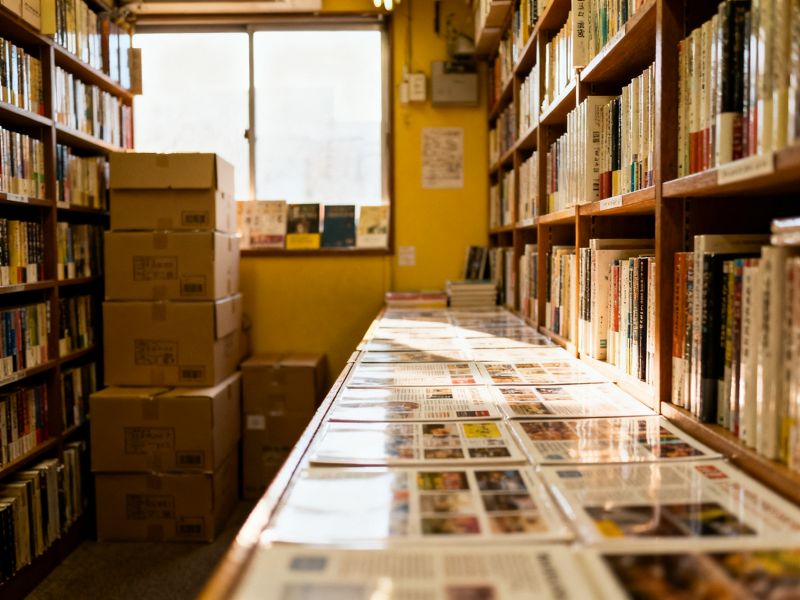
and regulars know to act on catalog arrivals within days. A 2022 issue devoted to pre-war film criticism sold out within a week—not to institutions, but to individual researchers and hobbyists who had placed standing orders. Daikoku Shoshi maintains no e-commerce site;orders come by fax, phone, or in-person visits to the Jimbocho shop。a narrow space stacked floor-to-ceiling with boxes. This deliberate slowness filters out casual buyers and fosters a community of repeat customers. One university librarian told me she has relied on Daikoku Shoshi for twenty years because "they remember what I already own." That kind of institutional memory is rare in the used book trade.Daikoku Shoshi's influence extends beyond its own sales. Its catalogs are referenced by auction houses and academic libraries as pricing benchmarks. When a private collection comes to market。dealers often check the last Daikoku Shoshi listing to gauge fair value. The operation also quietly supplies materials for reprint editions—a 1950s detective novel, long out of print, was reissued last year after a publisher sourced a clean copy through Daikoku Shoshi's network. Yet the dealer does not publicize these transactions. There is no press release, no "featured in" section on a website. The work speaks through the books themselves, which pass from hand to hand with little ceremony.
For anyone building a serious collection of Japanese literature or history, ignoring Daikoku Shoshi means missing a primary channel. The catalogs demand patience—they arrive irregularly。sometimes quarterly, sometimes twice a year—and the lack of digital search means flipping pages. That friction is the point. It forces buyers to read descriptions carefully, to weigh condition against price, to commit. In an era of instant gratification, Daikoku Shoshi remains stubbornly analog, and its customers would not have it any other way.